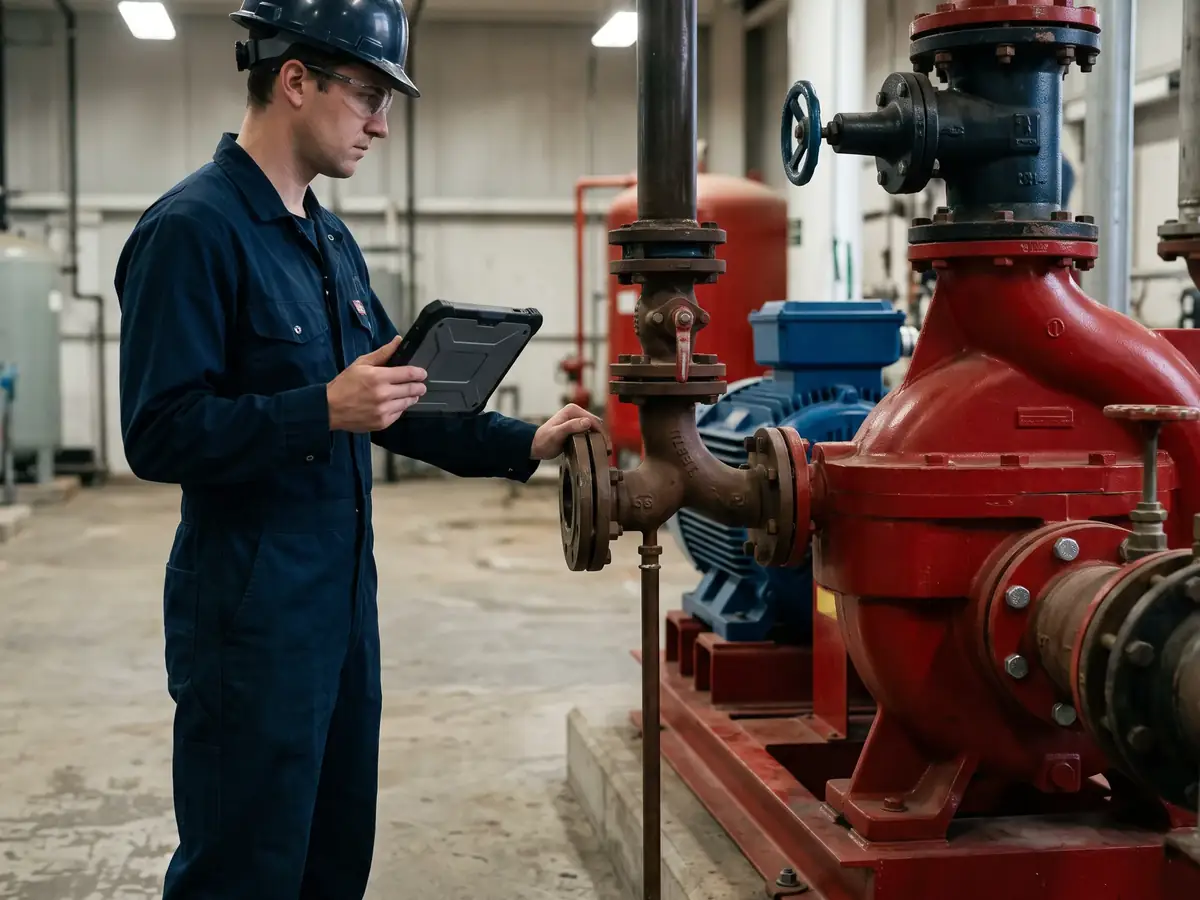
Fire pump testing
No-flow test weekly or monthly, depending on the pump type, and flow test annually.
NFPA 25
Maintenance and inspection software for fire protection systems.
Every pump, sprinkler, detector, hydrant, extinguisher and water tank has its routine and its logbook, under the criteria your plant approves.
NOM-002-STPS requires every plant to have an annual inspection and testing program with records; in high-risk areas it includes detection, alarms and fixed systems. The NFPA standards your plant adopts set the detail for each family.
No-flow test weekly or monthly, depending on the pump type, and flow test annually.
NFPA 25
Annual inspection of the system and periodic testing of its components.
NFPA 25
Inspection and testing at the frequency that applies to each type of device.
NFPA 72
Monthly inspection and maintenance at least once a year.
NOM-002 · NFPA 10
Annual inspection and annual flow test on outdoor hydrants.
NFPA 25
Periodic inspection of the level and exterior, and of the interior every 3 to 5 years.
NFPA 25
NOM-002 is the baseline. On top of it, your plant adds whatever your corporate office and your insurer require.
The NFPA standards you adopt, European standards such as EN 12845 for sprinklers or EN 671-3 for hoses, or the FM Global standard if your policy requires it: all of it fits into your criteria.
In the NFPA inspection and maintenance standards, responsibility lies with the system owner. VULKRON gives you the record of what was inspected, when and who signed it, in electronic form, as accepted by NFPA 25, NFPA 72 and NOM-002, which requires keeping it for three years.
VULKRON does not replace what NOM-002 requires of the employer: the safety officer, trained brigades, accredited service providers and the verification reports the authorities or your insurer require.
The six families come with their inspection, testing and maintenance routines. The VULKRON Engineers propose which ones apply and how often, including for the four configurable families, and your plant approves or adjusts them.
Each routine has its checkpoints and the acceptable range for each measurement; your people and your contractors inspect under those criteria, and the app accepts no other format. Each asset carries its QR code, with a tie-on tag for extinguishers and smoke detectors.
Your criteria set which points are critical, routine by routine. That is the rule behind the report for each routine.
In the example, the weekly inspection found the diesel pump controller in manual. The report comes out red with the finding and stays in the asset's logbook, ready for the auditor. What is done with the equipment is your plant's decision, and its work order goes on the calendar.
| # | Question | Answer | Acceptable range |
|---|---|---|---|
| 1 | Ambient temperature in pump room | 30 °C | 4.4 - 40 °C |
| 3 | Fuel level in diesel tank | 77.7 % | 67 - 100 % |
| 4 | Suction pressure during operation | 102 psi | 0 - 200 psi |
| 6 | Diesel engine start time | 10 s | 0 - 20 s |
| 9 | Starting battery voltage | 25 V | 24 - 29 V |
| 12 | System set to automatic | MANUAL | Automatic |
| Excerpt: 6 of 13 points | |||
Controller panel in MANUAL position. The pump would not start on its own if system pressure dropped.
Switchboards, substations and grounding systems in your plant, with NOM-029 as the baseline.
View Electrical SafetyTwelve industries, with the systems inspected in each one and the standard each plant adds.
View industriesMinor incidents signal the serious one. What to check beforehand.
PreventionWith sample equipment from a demo plant, and your questions about the standards that apply to yours.